By Urban Shihemi, January 24,2026
Kenya has been named among countries in Eastern Africa experiencing worsening food insecurity as the region grapples with overlapping climate shocks, disease outbreaks and funding shortfalls, according to the United Nations Office for the Coordination of Humanitarian Affairs (OCHA).
Eastern Africa is currently home to some of the world’s most severe and complex humanitarian crises, with an estimated 48.5 million people in need of assistance about 20 per cent of the global caseload. Nearly 70 per cent of those affected are in Sudan, where ongoing conflict continues to drive large-scale humanitarian needs.
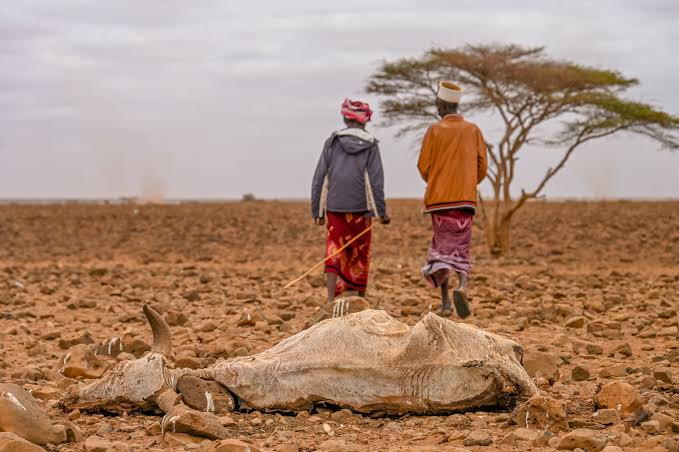
Humanitarian agencies warn that the impacts of climate change, political instability, economic shocks and disease outbreaks are intensifying vulnerabilities across the region, including in Kenya. Extremely poor rainfall during the October–December (OND) rainy season has significantly deepened food insecurity. December assessments showed that the OND season was among the driest on record, driven by La Niña conditions, leading to a severe drought across the eastern Horn of Africa.
The current drought comes less than three years after the region endured a historic dry spell between late 2020 and early 2023. As a result, worsening food insecurity is expected to persist, with nearly 36 million people in Burundi, Kenya, Somalia, South Sudan, Sudan, Tanzania and Uganda projected to face crisis levels of food insecurity classified as IPC Phase 3 or higher — between June 2025 and February 2026.
Malnutrition remains alarmingly high across the region. More than 8 million children under the age of five are affected, alongside over 1.3 million pregnant and breastfeeding women, placing additional strain on already fragile health systems.
Displacement levels in Eastern Africa are among the highest globally, with more than 25 million people uprooted from their homes as of December 2025.
Over two million people across Kenya are facing worsening food insecurity following one of the driest October to December 2025 rainy seasons on record. The prolonged drought has led to rising rates of malnutrition, increased risk of disease outbreaks, and disrupted access to essential health services