By Urban Shihemi, December 11, 2025
The government is laying plans to introduce large-scale date farming across arid and semi-arid counties in a move officials say could transform household incomes, strengthen resilience to drought and unlock new export markets for Kenya.
The country has launched an aggressive push to build a billion-shilling date palm industry across its arid and semi-arid lands as top national and county officials ramp up efforts to commercialize one of the world’s most profitable dryland crops.
Counties identified include Wajir, Mandera, Marsabit, Turkana, Garissa, Kitui, Tana River and Makueni, all of which fall within the ASAL belt and experience recurring climate shocks that hinder stable agricultural production.
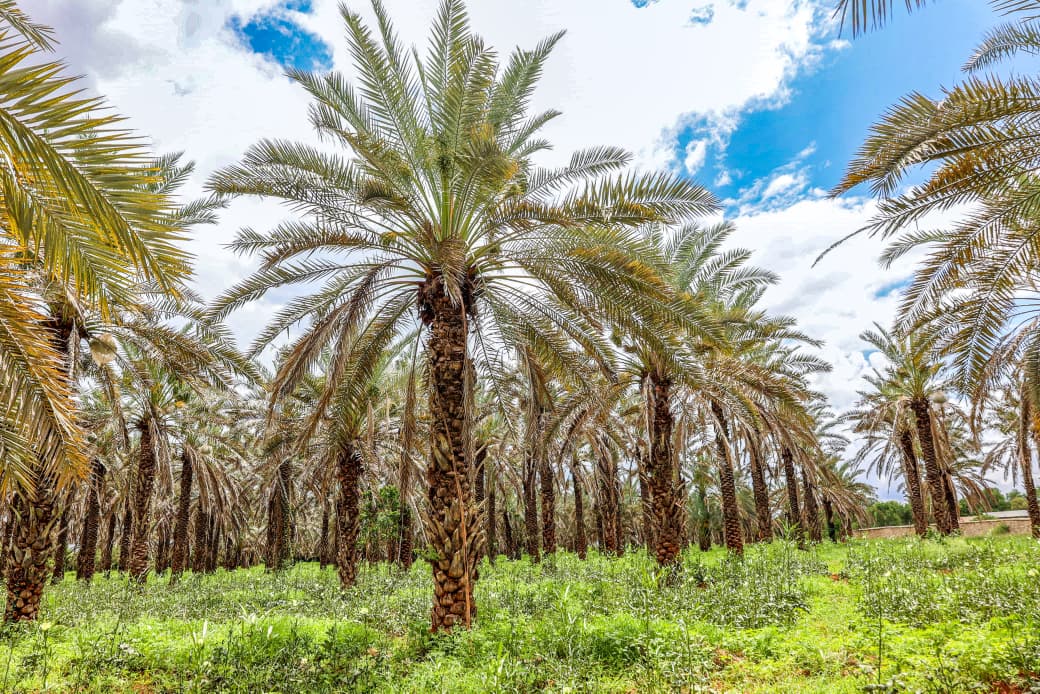
In a high-profile tour of Kutch Farm in Kibwezi, Makueni County, Agricultural and Food Authority (AFA) Director General Dr. Bruno Linyiru, COG Chair and Wajir Governor Ahmed Abdullahi and technical teams from KEPHIS and KALRO inspected thriving Indian date varieties in a mission aimed at accelerating Kenya’s entry into the global date value chain.

Globally, dates are a multi-billion-dollar commodity dominated by Egypt, Saudi Arabia, Iran, Iraq, Algeria and the UAE regions whose heat and low-humidity conditions are almost identical to northern Kenya.
Kenya only produced just 1,100 kilograms of dates in 2023 and spent over KSh 359 million importing the fruit in 2024, despite having natural conditions ideal for production.
Officials say this gap represents one of the country’s biggest untapped agricultural opportunities.
“As climate patterns shift, Kenya must diversify. Date palms are a high-value, drought-tolerant crop perfectly suited for ASAL regions. Our focus is to unlock quality planting material, strengthen value chains and support counties ready to scale,” said Dr. Linyiru.
Momentum is now building toward developing certified nurseries, expanding irrigation infrastructure, training farmers, and establishing processing and packaging hubs that can position Kenya as a competitive regional producer.
Kenya currently relies heavily on imported dates, especially during the month of Ramadhan despite having vast tracts of land ecologically suitable for the crop.