Urban Shihemi , January 30, 2026
Women’s safety is a national crisis that threatens Kenya’s development, civil society leaders have warned, as women organizations call for urgent and stronger protection of women facing gender-based violence (GBV).
The Echo Network for Africa Foundation, the African Women Leadership Network (AWLN) Kenya Chapter, and the Democracy Trust Fund said that despite women being central to the country’s economic and social progress, they continue to suffer disproportionately from violence, discrimination, and structural inequalities.
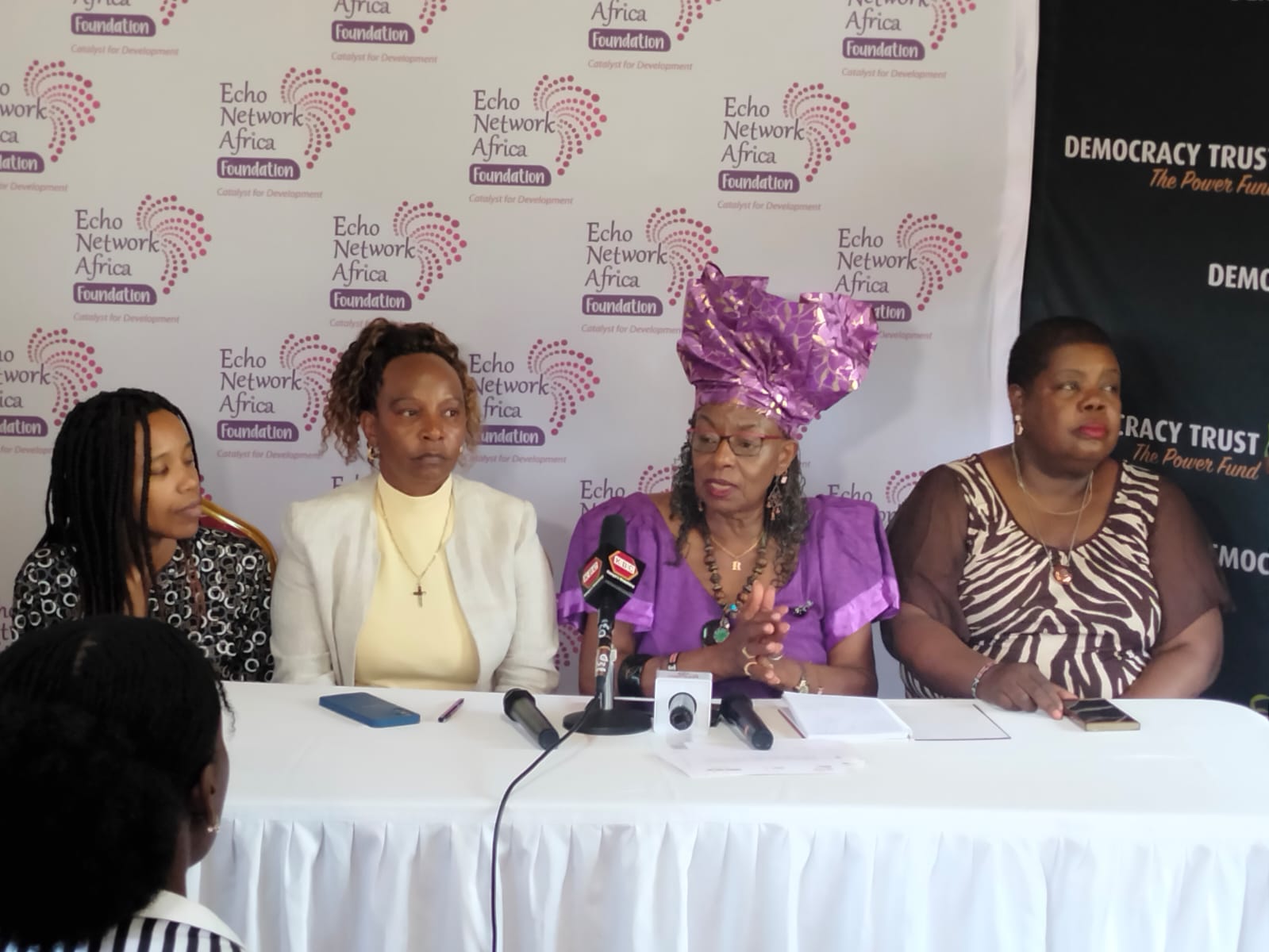
Speaking during a press briefing in Nairobi on women’s leadership and safety, the organizations said GBV remains widespread across the country, affecting women in homes, workplaces, politics, and public spaces, while limiting their access to opportunities and justice.
Dr. Jennifer Riria, CEO of the Echo Network for Africa Foundation, said the persistence of GBV exposes deep-rooted inequalities that continue to undermine women’s dignity and potential.
“Women continue to make invaluable contributions to the national development of our country, yet they suffer the most from gender-based violence, economic exclusion, and social injustices,” Dr. Riria said.
She stressed that GBV should not be viewed as a private or women’s issue but as a national emergency requiring collective action.
They urged the government to strengthen the implementation of existing GBV laws, increase funding for survivor support services, and invest in prevention through education and community engagement.
“The women of Kenya welcome the report and recommendations of the Presidential technical Working group on gender based violence including femicide led by Dr Nancy Baraza. We support the recommendation that the president urgently proclaim GBV as a national disaster,” she added.
On education, the women leaders raised serious concerns over the implementation of the Competency-Based Education (CBE) system, citing a low transition rate from junior to senior secondary school, a chaotic and unclear placement process, and inadequate infrastructure to support the new curriculum. They warned that gaps in preparedness, including shortages of classrooms, learning materials, and trained teachers, risk locking out thousands of learners from progressing to senior secondary education.
The leaders said the challenges threaten to widen existing inequalities, especially for learners from low-income and marginalized communities, and called on the government to urgently address the shortcomings to ensure a smooth, inclusive, and equitable transition under the CBE framework.