By Urban Shihemi, December 13,2025
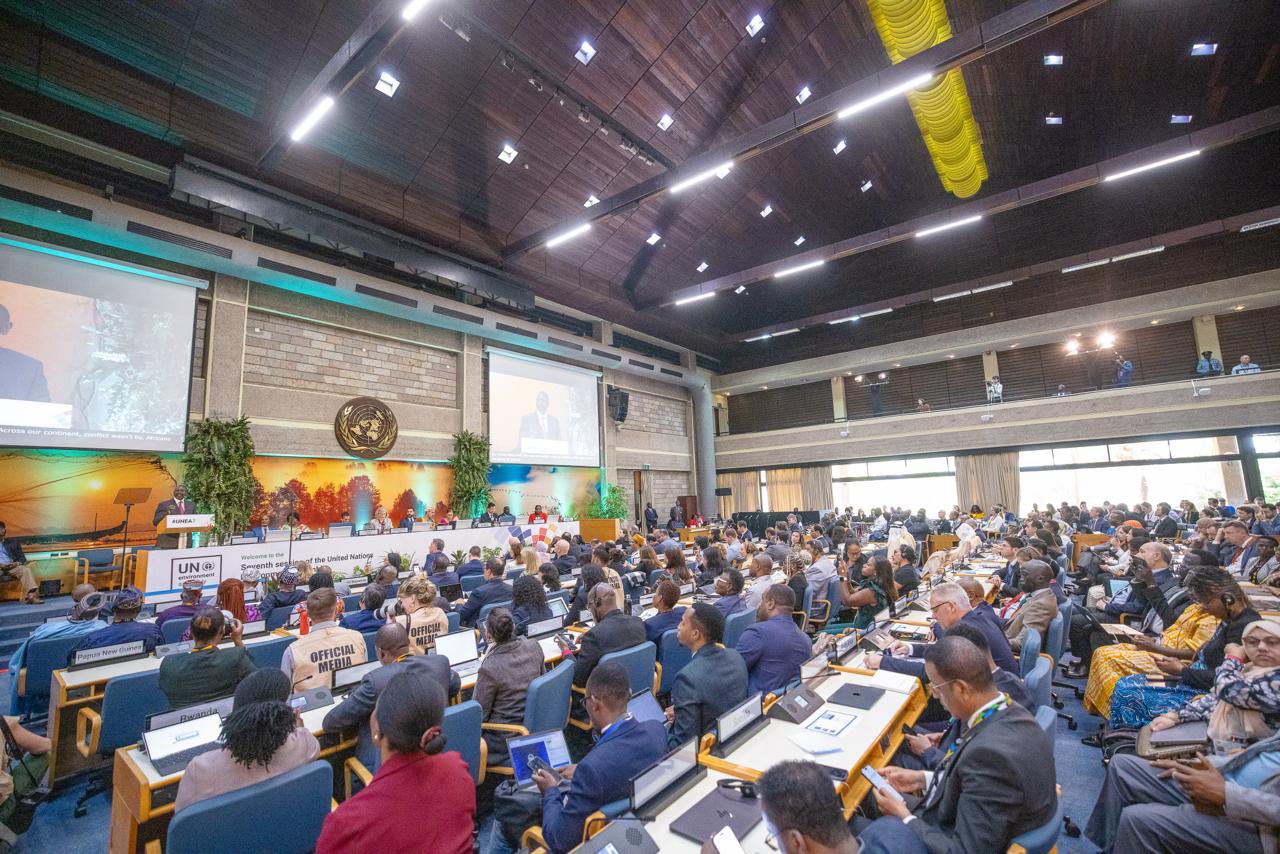
The United Nations has, for the first time, formally placed the environmental sustainability of artificial intelligence (AI) at the centre of global environmental governance following the adoption of a landmark resolution at the Seventh United Nations Environment Assembly (UNEA-7) in Nairobi.
The resolution, spearheaded by Kenya and adopted under the UNEA-7 theme “Advancing sustainable solutions for a resilient planet,” marks a historic moment in multilateral diplomacy.
It is the first comprehensive effort by the UN to examine the environmental footprint of AI systems, including their energy demands, water use, mineral extraction, land impact and broader effects on ecosystems, while also recognizing AI’s potential to strengthen climate resilience, protect biodiversity and support environmental conservation.
Kenya’s leadership in driving the resolution has been widely credited to the Office of the Special Envoy on Technology in the Office of the President, led by Ambassador Philip Thigo.
Working closely with government partners and the diplomatic community, the team successfully rallied global support to ensure that environmental sustainability becomes a core consideration in the development and deployment of AI technologies.
“This resolution recognizes that artificial intelligence will profoundly shape our planet and our economies,” Ambassador Thigo said. “Africa cannot afford to be a bystander in this transformation. We must shape an AI future that is sustainable, inclusive and grounded in environmental responsibility.”
He commended the collaborative spirit of member states, noting the support of delegations from the European Union, the United Kingdom, the African Group and Egypt, while emphasizing the importance of including voices from the Global South in shaping the future of AI.
“Together, we have ensured representation from all regions in deciding how intelligence can serve humanity and our environment,” he added.
The adopted resolution underscores that AI systems must be developed and deployed in ways that prioritize environmental sustainability.
It calls for the use of AI to advance environmental protection, conservation and restoration efforts, while ensuring access to high-quality environmental data and empowering developing countries to build independent AI capacities.
It further mandates the United Nations Environment Programme (UNEP) to strengthen scientific understanding of AI’s environmental impacts, aligning this work with broader UN initiatives, including the Global Digital Compact.
Beyond its technical implications, the resolution reflects a broader vision of an equitable, sustainable and inclusive digital future.